I want to say something straight away, before we get into any of this — you do not need a fancy house. You do not need a specialist sensory room with a ball pit and fibre optic lights (although if you have one, I’m coming round). You just need to understand your child. That’s it. That’s the whole thing.
Because every autistic child experiences the world differently. For some kids, a sound that you or I would barely notice — the hum of a fridge, the distant sound of a lawnmower — can feel absolutely unbearable. Lights that seem perfectly normal to us can feel like someone’s shining a torch directly into their eyes. So home — the place that’s supposed to be their sanctuary — can sometimes feel anything but.
A safe space gives your child somewhere to land. Somewhere to retreat to when the world has been too much, so they can regulate, recharge, and just… breathe.
Why it actually matters
When Matthew was little, our house didn’t feel calm to him at all. It felt like a place where meltdowns happened, where everything was unpredictable, and where he had very little control over anything. And the thing is — autistic children often desperately need a sense of control and predictability. When they don’t have it, everything becomes harder. The meltdowns are bigger, the anxiety is worse, and everyone in the house is walking on eggshells.
A dedicated safe space can make such a difference. It reduces meltdowns. It supports emotional regulation. And most importantly, it sends your child a message — even if they’re too young to understand the words. It says: You are safe here. Just as you are.
Start with your child, not the space
Before you move a single piece of furniture or order anything online, just… watch your child. I know that sounds obvious, but it’s amazing how much we can figure out just by paying attention. What sets them off? What calms them down? Do they seek out sensory input — climbing, squeezing, bouncing — or do they try to avoid it?
There is absolutely no one-size-fits-all answer here. What works for Matthew might be completely wrong for Blake, and what works for your child might be completely different again. So let your child’s preferences guide you. They’re telling you what they need — we just have to listen.
It doesn’t have to be a whole room
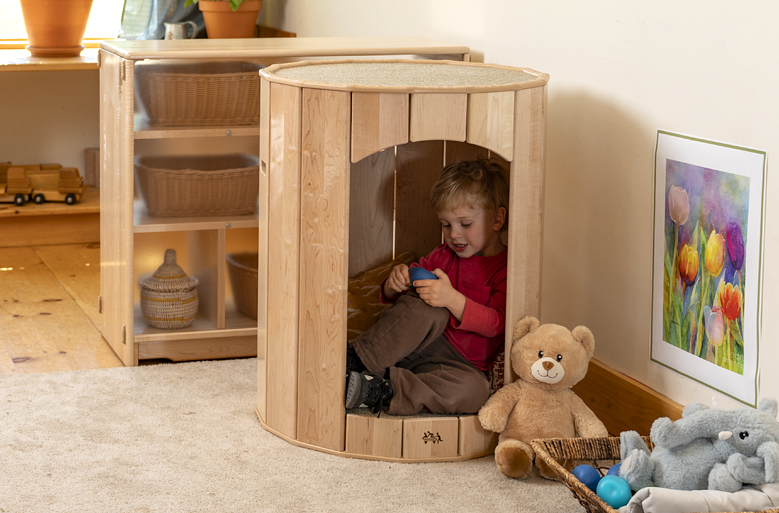
I cannot stress this enough. You don’t need to knock down a wall or convert the garage. A safe space can be a quiet corner of a bedroom. It can be a little tent or teepee (kids absolutely love these, by the way — something about the enclosed, cosy feeling seems to work really well for a lot of autistic children). It can be the space under the stairs. It can even be a sectioned-off part of the living room.
What matters is that it’s consistent. That it’s always there. That your child knows exactly where to find it.
Think about the senses
Once you’ve chosen your spot, think about how it feels. Not how it looks on Instagram — how it actually feels to be in it.
Lighting is a big one. Harsh overhead lights can be genuinely painful for some autistic children. Soft, warm lighting is almost always better. Dimmable lamps are great, blackout curtains if brightness is a trigger.
Sound is another huge one. Try to reduce background noise in that area. Some children find noise-cancelling headphones helpful. Others love having calming music or white noise playing quietly.
And touch — soft blankets, cushions, beanbags. Avoid scratchy or stiff materials. The whole point is that everything in that space should feel gentle and safe. And try to keep strong smells out of it, unless your child actually finds a particular scent soothing.
What to put in it
Comfort objects. Favourite toys. Weighted blankets — these are genuinely brilliant for a lot of autistic children, and if you haven’t tried one yet, I’d really recommend looking into them. Fidget toys. Books. Calming visuals. If your child loves movement — bouncing, rocking, spinning — try to include something that lets them do that safely in or near the space.
And please, please don’t make it too cluttered. Too much stuff can be just as overwhelming as too little. Keep it simple. Keep it calm.
Respect the space — and your child
This is so important. If your child goes to their safe space, give them time. Don’t hover. Don’t bombard them with questions the second they get in there. Don’t tidy it up while they’re using it. Let it be theirs. Let them come out when they’re ready. That sense of ownership and control is a huge part of why the space works — the moment it starts to feel like it belongs to you rather than them, it loses its magic.
You can gently guide them towards it during the early signs of overwhelm — before a meltdown is in full swing — and over time, they may start to use it completely on their own. That’s the goal.
It doesn’t have to be perfect. It will change as your child grows, as their needs shift, as you learn more about what works for them. And that’s completely okay. Start small. A blanket, a quiet corner, and a couple of things they love. That can be enough.
What matters most isn’t how the space looks. It’s how it makes your child feel. And if they feel safe — really, genuinely safe — then you’ve done exactly the right thing.
Recommended Products for Creating Your Child’s Safe Space
If you’re looking to build or enhance your child’s safe space, here are a few items that can make a big difference. These are products I personally recommend and trust:
- Cosy Teepee Tent
A perfect little hideaway where your child can retreat, feel secure, and have their own space.
👉 Cosy Teepee Tent - Noise Cancelling Headphones
Ideal for reducing overwhelming sounds and helping your child feel more in control of their environment.
👉 Noise Cancelling Headphones - Weighted Blanket
Provides deep pressure comfort, which can be incredibly calming and reassuring for many autistic children.
👉 Weighted Blanket
Please note: This post contains affiliate links, which means I may earn a small commission at no extra cost to you if you choose to make a purchase.