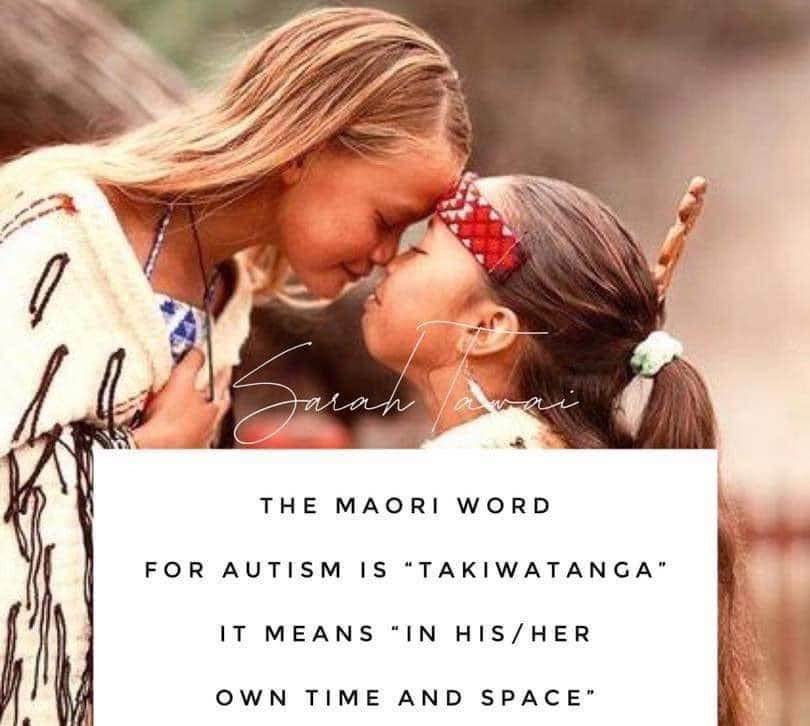
There is a beautiful Māori word that is slowly finding its way into more conversations about autism: Takiwatanga.
Takiwatanga means “in their own time and space.”
It is a word gifted by Māori communities in Aotearoa (New Zealand) to describe autism in a way that feels respectful, empowering, and deeply human.
And when you sit with it for a moment… it changes everything.
🌿 A Different Way of Seeing Autism
So often, autism is described in clinical terms. Diagnoses. Deficits. Delays. Disorder.
But Takiwatanga shifts the focus.
Instead of asking, “What is wrong?”
It gently asks, “What is different about their time? Their space? Their rhythm?”
For many families — including my own — this perspective feels like breathing fresh air after years of medical language.
Autistic individuals don’t experience the world “behind” us or “ahead” of us.
They experience it differently.
In their own time.
In their own space.
And that difference carries beauty.
💫 What “In Their Own Time” Can Look Like
“In their own time” might mean:
- Processing conversations more slowly — but deeply.
- Developing skills on a timeline that doesn’t match the classroom chart.
- Repeating movements (like bouncing or rocking) to regulate their nervous system.
- Taking longer to transition — because their brain is working overtime.
It’s not a race.
It’s not a competition.
It’s a rhythm.
🌊 What “In Their Own Space” Can Mean
“In their own space” might look like:
- Needing physical distance in crowded rooms.
- Feeling overwhelmed by noise, smells, or touch.
- Avoiding public bathrooms because sensory overload is real and intense.
- Retreating to quiet corners to reset.
That space isn’t rejection.
It’s protection.
It’s regulation.
It’s survival.
When we honour that space instead of fighting it, we build trust instead of trauma.
🌺 Why Language Matters
Words shape how we see people.
When we say “disorder,” we subconsciously search for something to fix.
When we say “Takiwatanga,” we are invited to understand.
This concept emerged from Māori perspectives in New Zealand, where identity is deeply connected to community, land, and belonging. In that worldview, difference is not automatically deficiency.
Imagine how powerful it would be if every autistic child grew up hearing:
“You experience the world in your own time and space — and that is okay.”
💙 From Correction to Connection
As parents, educators, and community members, Takiwatanga challenges us.
Instead of asking:
- “How do we make them fit?”
We begin asking:
- “How do we adjust the environment?”
- “How do we slow down?”
- “How do we create safer spaces?”
It moves us from correction to connection.
And connection changes lives.
🌟 A Gentle Reminder
Autistic individuals are not late.
They are not broken.
They are not wrong.
They are moving through life in their own time and space.
Takiwatanga.
And when we learn to meet them there — patiently, compassionately, respectfully — we don’t just support them.
We grow.