For many people, using a public toilet is barely a second thought. You need to go, you go, you wash your hands, you leave. Simple.
But for some autistic children — and adults — public toilets are anything but simple. They can be overwhelming, distressing, and in some cases, genuinely terrifying. And before anyone rolls their eyes at that, let me assure you… I get it. Not just as a mum, but personally.
It’s a Sensory Nightmare
Let’s start with the obvious one — the smell.
Now, I know public toilets don’t exactly smell like a bouquet of roses for anyone. But for those of us with heightened sensory sensitivities, it’s a completely different experience. My sense of smell is intense. I notice smells before anyone else in the room does, and once I’ve caught a scent, it doesn’t fade into the background — it amplifies. It takes over. Walking into a bad public toilet doesn’t just make me wrinkle my nose… it makes me feel genuinely, physically sick.
And I can’t just “push through it.” My body reacts instantly, whether I want it to or not.
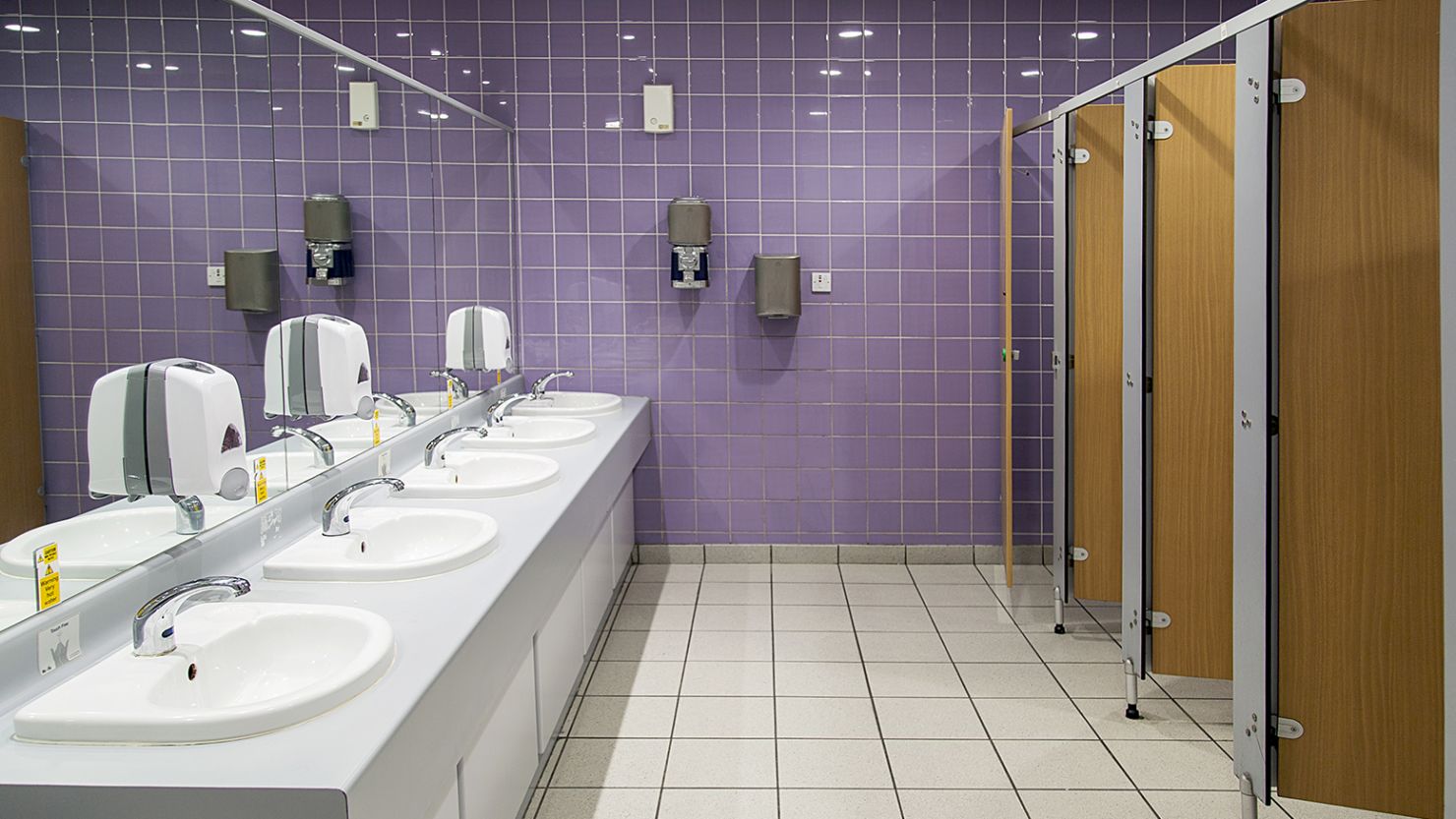
But smell is just the beginning. Public toilets are basically a sensory assault course:
- Hand dryers that explode into life without warning
- That awful echoing that bounces off every tiled surface
- Flickering fluorescent lights
- Cold, hard, unfamiliar textures
- The unpredictability of not knowing what state you’re going to walk into
For someone whose nervous system is already working overtime just existing in the world, this kind of environment can tip them straight into overload.
Blake’s Story
My eldest son Blake absolutely hates using public toilets. And I don’t use the word “hates” lightly — this isn’t a mild preference. It’s a genuine, deep aversion that has had real consequences for his health.
When Blake was younger, he would hold on — for hours, sometimes — rather than use a toilet that wasn’t his own. And I mean hold on. To the point where he caused himself actual bowel problems. That’s how distressing the alternative felt to him. For a child, to choose physical pain over using a public toilet… that tells you everything you need to know about how overwhelming that environment truly is.
Even now, as a teenager, if Blake needs the toilet during school hours, he’ll come home to use ours. Our house. A journey, just to use his own toilet. And honestly? I understand it completely. I never try to talk him out of it.
And when we go on days out — places like Blackpool Pleasure Beach — I have to plan ahead. I always make sure I book a hotel as close to the park as possible, specifically so that if Blake needs the toilet, he can nip back without it becoming a massive ordeal. It sounds like a small thing, but it makes the difference between a good day and a really difficult one.
That’s the reality of it. That’s the planning that goes on behind the scenes that nobody else sees.
The Anxiety of Not Knowing
A big part of what makes public toilets so hard isn’t just the sensory experience — it’s the uncertainty. Autistic people often rely on predictability and routine to feel safe, and public toilets offer neither.
Will it be clean? Will it be loud? Will the lock actually work? Will someone try to come in? Will there be a hand dryer that goes off at full blast the second you’re least expecting it?
For some children, just the anticipation of all of that is enough to send their anxiety through the roof before they’ve even stepped through the door.
When Avoidance Becomes a Health Issue
This is the part I really want people to understand — because it gets dismissed so often as stubbornness or defiance, and it’s neither of those things.
When a child refuses to use public toilets, they don’t just… stop needing the toilet. They hold it. And holding it for hours at a time, day after day, can lead to real physical problems — urinary infections, constipation, bowel issues. Blake is living proof of that. His avoidance wasn’t a choice made out of awkwardness. It was a coping mechanism. It was his body’s way of saying this environment is too much for me to cope with.
Understanding that distinction matters. A lot.
What Can Actually Help
Every child is different, so there’s no one-size-fits-all solution here — but a few things have genuinely made a difference for us and for others I’ve spoken to:
- Planning ahead — knowing where the toilets are before you arrive, looking at photos online if possible, or doing a trial run somewhere quiet
- Carrying comfort items — noise-cancelling headphones are a game changer for the hand dryer issue. I also always carry baby wipes, because even I need to wipe a toilet seat before I can think about using it!
- Finding accessible or quieter toilets — these are often slightly less chaotic than the main facilities and can feel much more manageable
- Never forcing it — I know it can feel urgent in the moment, but forcing a child into a situation that causes them genuine distress rarely ends well, for anyone
- Booking that hotel close to the theme park — sometimes the solution is just practical, and that’s perfectly okay
A Little Understanding Goes a Long Way
If you’ve ever seen a child having a meltdown over a public toilet and thought what on earth… — I hope this has shed a little light on what’s actually going on beneath the surface. It’s not a tantrum. It’s not bad parenting. It’s a nervous system that’s already doing its absolute best, being pushed past its limit by an environment that was never designed with it in mind.
A bit of patience and compassion can make a genuinely enormous difference.
And if you’re a parent reading this who’s been doing the hotel-near-the-theme-park thing, or timing days out around toilet availability, or carrying a bag full of wipes just so your child can cope…
You’re not alone. And you’re doing brilliantly. 💙