On giving our kids the words — and the permission — to say “I need space”
This is something I feel really strongly about, and it’s something I wish I’d understood a lot sooner when my boys were younger.
For many autistic children, personal space isn’t just a nice-to-have. It’s a genuine need. And for a long time, I don’t think the world gave enough credit to just how important that is — or how much it matters that our kids have the tools to communicate it.
Communication doesn’t always need words
When we talk about communication, most people automatically picture speaking. But for so many children — and especially autistic children — communication can look completely different. And that’s absolutely fine.
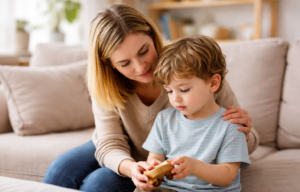
Something as simple as a hand signal, a small gesture, or a visual card that says “I need space right now” can be incredibly powerful. It hands the child some control in a world that can often feel overwhelming and unpredictable. And when a child feels in control of how they express their needs, their confidence grows. It’s one of those small adaptations that makes a genuinely big difference.
It doesn’t have to be complicated either. We always overcomplicate these things! A thumbs down. A specific colour card. Whatever feels natural to your child. The goal is just giving them a way to say what they need without it feeling like a battle.
The personal space bubble
One of the simplest and most effective things you can do — especially with younger children — is introduce the idea of a personal space bubble. An invisible circle that surrounds each of us, and that belongs to us.
You can explain it however works best for your child. Use a favourite toy to act it out. Draw it together. Make it silly and playful. The point is just helping them understand that everyone has this bubble, and that it’s okay — more than okay, it’s completely normal — to want yours respected.
Encourage your child to show you when their bubble needs to be a bit bigger. Some days it will be. Some days it’ll be enormous. And that’s absolutely fine too.
Teaching the people around them
This is the part that I think sometimes gets forgotten. Because it’s not enough to teach our children to express their boundaries — we also have to make sure the people around them know how to respect those boundaries.
Siblings are a big one. (Anyone with multiple kids will know that personal space can feel like a distant memory in your own house!) But with gentle reminders, simple explanations, and even a bit of role play, brothers and sisters can absolutely learn to understand this. So can grandparents, friends, teachers — anyone who is regularly part of your child’s world.
When the people around your child get it, it changes the whole dynamic. It stops being your child’s “issue” to manage alone, and starts being something the whole family navigates together. That shift matters.
A safe space at home
Every child needs somewhere they can just be. No expectations. No noise. No one needing anything from them for five minutes.
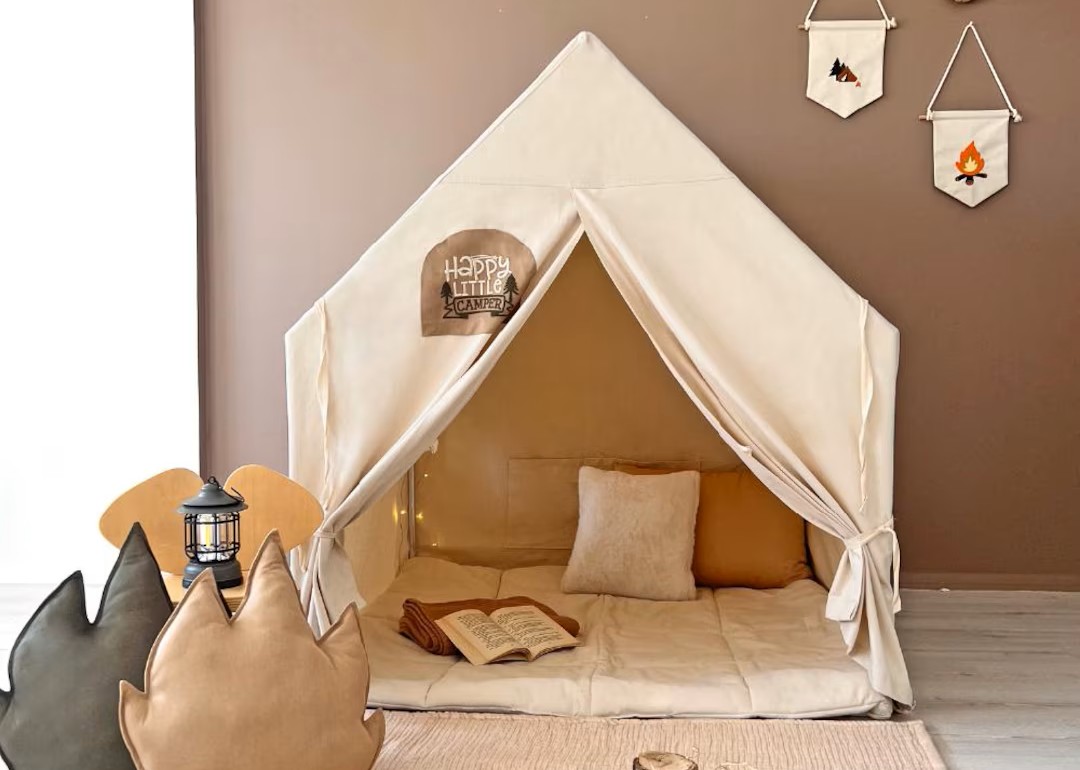
For autistic children, having a dedicated safe space at home can be genuinely grounding — somewhere they can retreat to when everything feels like too much. It doesn’t have to be anything fancy. A quiet corner with some cushions. A cosy little nook with their favourite books. A small tent or a den they’ve built themselves. Whatever works for them.
Matthew had a Disney Cars tent full of cushions that he retreated to when he was younger, and honestly, it made such a difference. When he was overwhelmed and couldn’t articulate what was wrong, just knowing he had somewhere safe to go — somewhere that was his — helped him regulate in a way that nothing else quite did.
Why this matters so much
When we honour a child’s need for personal space, we’re sending them a message that goes far beyond the immediate moment. We’re telling them: your feelings are real. Your needs are valid. You are safe here.
And for autistic children who so often spend their days masking, adapting, and working incredibly hard just to get through the school day — coming home to a space and a family that truly respects their needs isn’t a luxury. It’s essential.
We’re not just helping them cope. We’re helping them grow up knowing that who they are is enough — and that the people who love them will always make room for that.
That’s the whole point, really.