If you’ve ever watched your child completely fall apart over what seems like a tiny, insignificant change… you’ll already know this.
It’s not the change itself that’s the problem. It’s the not knowing it was coming.
For a lot of autistic children, the world can feel genuinely overwhelming. Not because they’re being dramatic or difficult — but because unpredictability is exhausting when your brain is constantly trying to process everything around it. Not knowing what’s coming next can send anxiety through the roof before the day has even really started.
When our children were younger, visual schedules genuinely changed things in our house. And I don’t say that lightly.
So what even is a visual schedule?
It’s exactly what it sounds like — a simple way of showing your child what’s going to happen throughout the day. Not telling them. Showing them.
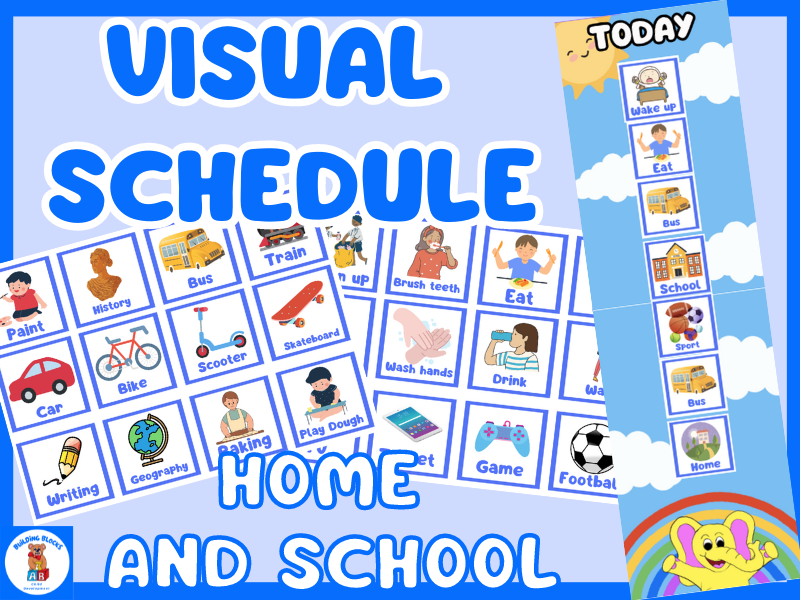
That might look like a printed timetable with pictures on it, a whiteboard with rough drawings, velcro cards that can be moved around, or even just a basic written list for older kids. It doesn’t need to be Pinterest-worthy. It just needs to be clear.
Why does it actually work?
A lot of autistic children are incredibly strong visual thinkers. Words are gone the second you’ve said them — but a visual stays right there where they can keep coming back to it.
The biggest thing a visual schedule does is make the day predictable. And when a child can see what’s coming next, that constant background hum of “what’s happening, what’s happening, what’s happening” starts to quieten down. That shift alone — from not knowing to knowing — can reduce anxiety in a way that’s honestly hard to put into words until you’ve witnessed it.
It also takes the pressure off you. Because instead of repeating yourself seventeen times — “get dressed, brush your teeth, we’re leaving in ten minutes, I said we’re leaving” — the schedule does the talking. Calmly. Consistently. Without the frustration creeping into your voice by the fourth reminder.
Transitions were always one of our biggest challenges. That switch from playtime to dinner, from home to school, from one activity to another — it’s a lot. A visual schedule means your child can see that transition coming. It stops being a sudden shock and starts being something they were already prepared for.
And there’s something else I think gets overlooked — it gives them a sense of control. When children can see their day laid out in front of them, they feel like they have some say in it. You can involve them by letting them move completed tasks along, or giving them some choice over the order of certain things. That little bit of ownership makes a huge difference.
Starting out
You genuinely don’t need anything fancy to begin with. Start small — pick three to five key parts of the day, use simple pictures (hand-drawn is absolutely fine), keep it consistent, and introduce any changes gently rather than all at once.
And be patient with yourself too. It takes a bit of time to find what works for your child specifically, because every autistic child is different. What transforms daily life for one family might not click for another — and that’s okay. The goal isn’t perfection. It’s just finding something that helps.
A final thought
A visual schedule is more than just a planning tool. At its core, it’s reassurance. It’s a way of saying to your child — you’re safe, you’re prepared, you know what’s coming.
For an anxious child, that message is everything.
Helpful Resources
If you want to give visual schedules a try but you’re not sure where to start — or you just don’t have the time to make your own from scratch on top of everything else you’re already doing — there are some lovely ready-made options out there.
This is an affiliate link, which means I may earn a small commission at no extra cost to you. I only ever recommend products I genuinely believe can help support families.