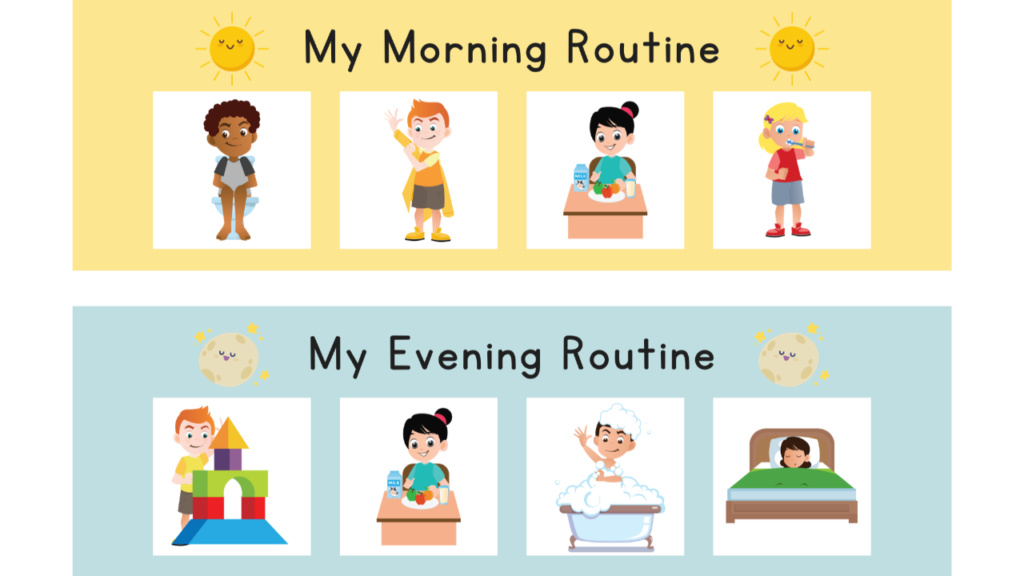

Routines are like a roadmap for daily life. They guide us through our days, giving structure, rhythm, and a sense of direction. For autistic children, though, these roadmaps are more than just helpful—they are essential.
The world can often feel overwhelming, unpredictable, and difficult to navigate. But when a child knows what comes next, something powerful happens: anxiety begins to soften. That sense of uncertainty is replaced with calm, and the day feels safer, more manageable.
🌍 When the World Feels Unpredictable
Imagine waking up to a day full of unknowns—where every moment holds a surprise you didn’t ask for.
For some, that might sound exciting. But for children who rely on consistency, it can feel unsettling, even frightening.
Routines provide reassurance. They create a steady framework where a child can move through their day with confidence. Within that structure, they are free to explore, learn, and grow—knowing there are familiar, comforting “landmarks” along the way.
The benefits of routine go far beyond simply helping a child feel calm.
Structured patterns help autistic children:
- Understand time and sequence
- Move between activities with less stress
- Build confidence in what comes next
- Develop independence in daily tasks
When a routine is well established, children begin to take ownership of their day. Small steps—getting dressed, brushing teeth, transitioning between activities—become opportunities for growth.
💛 Building a Foundation for Confidence
At its heart, a routine offers something incredibly powerful: security.
And from that security grows confidence.
When children feel safe and supported, they are more able to engage with the world around them. They can try new things, manage transitions more smoothly, and develop skills that will support them throughout life.
For autistic children, routines aren’t about rigidity—they’re about freedom through predictability.