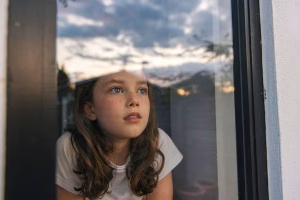
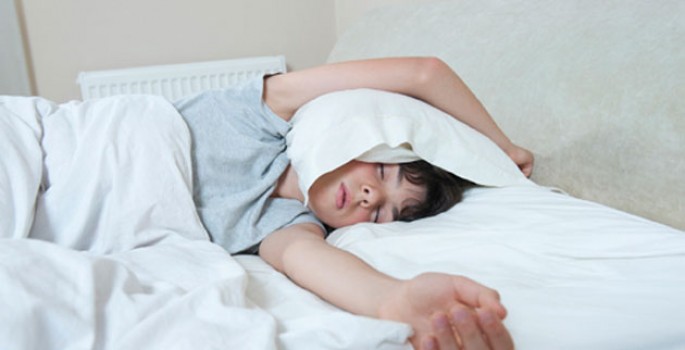
If you’re the parent of an autistic child, there’s a very good chance you’re reading this with tired eyes.
Maybe your child took hours to fall asleep last night. Maybe they woke at 2am and were absolutely wide awake, ready to discuss the history of the Roman Empire or why clouds are made of water droplets. Maybe they finally drifted off at some completely unreasonable hour and then couldn’t drag themselves out of bed this morning. Or maybe — and I know a lot of you will relate to this — all three happened, one after the other, on a school night.
Sleep issues and autism are so common that they almost feel like a package deal. Studies suggest that somewhere between 50 and 80 percent of autistic children experience some form of sleep difficulty. That’s not a small number. That’s the majority. And yet it’s one of those things that doesn’t get talked about enough — possibly because most of us are too exhausted to bring it up.
So let’s talk about it.
Why is sleep so difficult for autistic children?
The short answer is: there’s no single reason. It’s usually a combination of factors, all tangled up together, which is part of what makes it so frustrating to deal with.
The brain doesn’t switch off easily.
A lot of autistic children — and autistic adults too — experience what I can only describe as a brain that refuses to power down. Where neurotypical children might yawn, get drowsy, and drift off relatively naturally, an autistic brain can stay buzzing and active long after the body is ready for sleep. Thoughts, anxieties, replaying the events of the day, thinking about something that happened three weeks ago — the mental chatter just doesn’t stop.
I’ve experienced this myself, if I’m honest. Lying there at night, re-running conversations in my head, wondering what I should have said differently, and suddenly it’s 1am and I’m wide awake analysing an interaction from 2019.
For autistic children, this is amplified. They may not even have the words to explain why they can’t sleep. They just… can’t.
Melatonin production can be different.
Melatonin is the hormone that signals to your body that it’s time to sleep. Research has shown that many autistic individuals produce melatonin at different times — or in different quantities — compared to neurotypical people. This means the natural tiredness cue that most people experience in the evening might come later, or barely at all. It’s not that your child is being awkward. Their body clock is genuinely wired differently.
Sensory sensitivities don’t clock off at bedtime.
This is a big one, and if you have a sensory-sensitive child, you’ll know exactly what I mean. The label on a pyjama top. The feeling of a duvet that’s ever so slightly too warm. The sound of a car passing outside. A light that’s not quite dark enough. A smell that seems faint to you but is overwhelming to them.
Sensory processing doesn’t take a break when your child climbs into bed. In fact, for some children, the quiet of bedtime makes sensory experiences even more noticeable — because all the other stimulation of the day has gone away and there’s nothing to drown out the irritations. What seems like a completely manageable environment to us can genuinely feel unbearable to a child who is highly sensory.
I think about this a lot with Blake. His sensory sensitivities around touch and smell are significant, and bedtime is a whole negotiation. The wrong pyjamas, the wrong pillow, a smell in the room he can’t identify — any of these things can derail the whole evening. And that’s not him being dramatic. That’s his nervous system doing what it does.
Anxiety is incredibly common.
Anxiety and autism often go hand in hand, and anxiety has a well-known habit of getting loudest at night when there’s nothing to distract from it. Worries about the next day, about school, about social situations, about things that might happen or might not happen — all of this can keep a child awake long after lights out.
Some autistic children also find the transition from the structure of the day to the unstructured time of night genuinely unsettling. The predictability of a routine helps regulate their nervous system, and bedtime — that liminal space between today and tomorrow — can feel uncertain and anxiety-provoking.
Difficulty with transitions.
Even the act of stopping what you’re doing and moving towards sleep is a transition, and transitions can be really hard for autistic children. If your child has been absorbed in something they love — a game, a book, a conversation about flags of the world — being asked to stop and shift gears into sleep mode can cause real distress. It’s not naughtiness. It’s a genuine neurological difficulty with switching between states.
What can actually help?
I want to be upfront here — I’m not a doctor or a sleep specialist, and every child is different. What works brilliantly for one family might do absolutely nothing for another. But here are some things that are worth exploring.
A consistent bedtime routine — and I mean consistent.
Routine is absolutely everything for a lot of autistic children. The predictability is what makes it feel safe. A clear, repeated sequence of events leading up to sleep — bath, pyjamas, a drink, a story, lights out, whatever works for your child — can help signal to the brain that sleep is coming. And it needs to happen at the same time every night, because variability is the enemy here. Even at weekends, if you can manage it.
Creating a sensory-friendly sleep environment.
Think about everything your child might be able to see, hear, smell, or feel in their bedroom and ask yourself: could any of this be bothering them? Blackout curtains if light is an issue. White noise if sound is a problem. Seamless pyjamas or specific fabrics if touch sensitivity is a factor. A weighted blanket can be genuinely helpful for some children, providing that deep pressure input that helps calm the nervous system. It might take some trial and error, but getting the environment right can make a real difference.
Winding down screens well before bed.
I know, I know — easier said than done. But the blue light from screens genuinely does interfere with melatonin production, and the stimulation of a game or a video can make it much harder for the brain to start powering down. Ideally, screens should be off at least an hour before bed. Something calm and low-key in that hour instead — music, drawing, a quiet audiobook — can help start the transition.
Visual schedules for bedtime.
For younger children especially, a visual schedule showing the steps of the bedtime routine can be incredibly effective. It removes the uncertainty — your child can see exactly what’s happening and what comes next. That predictability is calming in itself.
Talking to your GP about melatonin.
If you’re really struggling, it’s absolutely worth speaking to your child’s GP or paediatrician about melatonin supplementation. It’s widely used for autistic children and there’s good evidence behind it. It’s not a cure-all, and it won’t help with every sleep issue, but for children who struggle to initiate sleep it can be genuinely helpful. Please don’t try to source it yourself though — speak to a professional first.
A word to the exhausted parents
If your child is a poor sleeper, I need you to know something: this is one of the hardest things about parenting an autistic child, and the impact on your own health and wellbeing is real and significant. Sleep deprivation is brutal. It affects your mood, your patience, your ability to cope. And when you’re already running on empty, finding the energy to implement new routines and environments feels almost impossible.
Please be kind to yourself. Ask for help if you can get it. Share the night shifts if you have a partner. Rest whenever you possibly can.
And know that you’re not failing because your child doesn’t sleep well. It’s not a reflection of your parenting. It’s neurology. And you are doing your absolute best in a genuinely exhausting situation.
That’s more than enough.