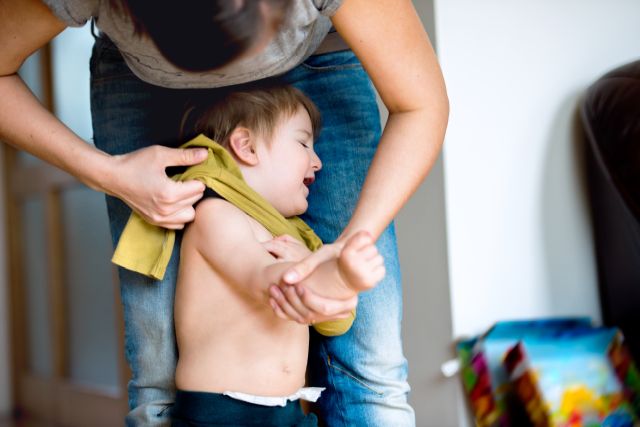
We’ve all faced those morning battles — trying to get your child dressed, guiding them into clothes while the clock ticks on. In many homes, it’s just part of the daily routine. But imagine this: the top you’re asking them to wear doesn’t just feel “wrong”… it feels like sandpaper dragging across their skin with every movement. Suddenly, it’s not a battle of wills — it’s a reaction to discomfort most of us will never fully feel…
Have you ever worn something that just didn’t feel right?
Maybe a jumper that was too itchy.
A label that scratched the back of your neck.
Jeans that felt too tight when you sat down.
Now imagine that feeling… but amplified. Constant. Inescapable.
For many autistic children, clothing isn’t just about comfort or style — it can be the difference between feeling safe in their body and feeling completely overwhelmed.
When Clothes Don’t Just “Feel Funny”
For a child with sensory sensitivities, certain fabrics, seams, or fits don’t just feel uncomfortable — they can feel unbearable.
A sock seam might feel like a sharp ridge pressing into their skin.
A clothing tag might feel like a tiny insect constantly crawling and biting.
A stiff fabric might feel like wearing sandpaper.
It’s not a mild annoyance. It can feel intense, distracting, even painful.
Imagine trying to focus at school, play with friends, or sit still for dinner… while something feels “wrong” on your body the entire time.
You wouldn’t be able to ignore it. Neither can they.
The “Background Noise” That Isn’t Background
Most of us are able to tune out physical sensations.
We stop noticing our clothes after a few minutes.
But for some autistic children, those sensations never fade into the background.
It’s like having a loud buzzing noise in your ear that no one else can hear.
Or like trying to relax while someone keeps tapping your shoulder… over and over again.
Eventually, it becomes overwhelming.
This is why something as small as a seam or a waistband can lead to distress, meltdowns, or refusal to get dressed.
It’s Not About Being “Fussy”
From the outside, it can look like a child is being picky or difficult.
“They just don’t like that top.”
“They’re being stubborn about socks again.”
But the reality is very different.
When a child refuses certain clothes, it’s often because their body is telling them something is wrong — loudly.
It’s not a choice. It’s a reaction.
Imagine being asked to wear something that makes your skin feel like it’s burning… and being told you have to “just get used to it.”
That’s the level of discomfort some children are experiencing.
The Emotional Impact
Clothing struggles don’t just affect getting dressed in the morning.
They can impact:
- School routines
- Confidence
- Social situations
- Family stress levels
A simple morning routine can turn into a battle — not because the child wants control, but because they’re trying to avoid discomfort they can’t tolerate.
And for parents, it can feel heartbreaking and exhausting at the same time.
What Helps?
Every child is different, but some small changes can make a big difference:
- Soft, breathable fabrics
- Tag-free clothing
- Seamless socks
- Looser fits (or sometimes tighter, depending on the child)
- Letting the child choose what feels safe
Most importantly — listening.
When a child says something “hurts” or “feels wrong,” even if we can’t feel it ourselves, their experience is real.
Seeing It Through Their Eyes
If you want to understand what this feels like, try this:
Put a small pebble in your shoe… and walk around all day.
Wear a wool jumper with no layer underneath, even if it itches.
Keep a clothing tag rubbing your neck and don’t adjust it.
Now imagine you’re not allowed to fix it.
That’s a glimpse into what some children experience daily.
A Little Understanding Goes a Long Way
Clothing sensory issues aren’t about defiance.
They’re about comfort, safety, and how a child experiences the world through their body.
With a little understanding, patience, and the right adjustments, we can make that world feel a lot gentler.