Reading this morning, I found myself pausing over a powerful idea — the kind that doesn’t just pass through your mind, but settles in your chest and asks to be felt.
I had been reading The Compound Effect by Darren Hardy, and one section in particular focused on routines — not the glamorous kind, not the “wake at 4 a.m. and conquer the world” kind, but the quiet, ordinary, repeatable actions that shape who we become.
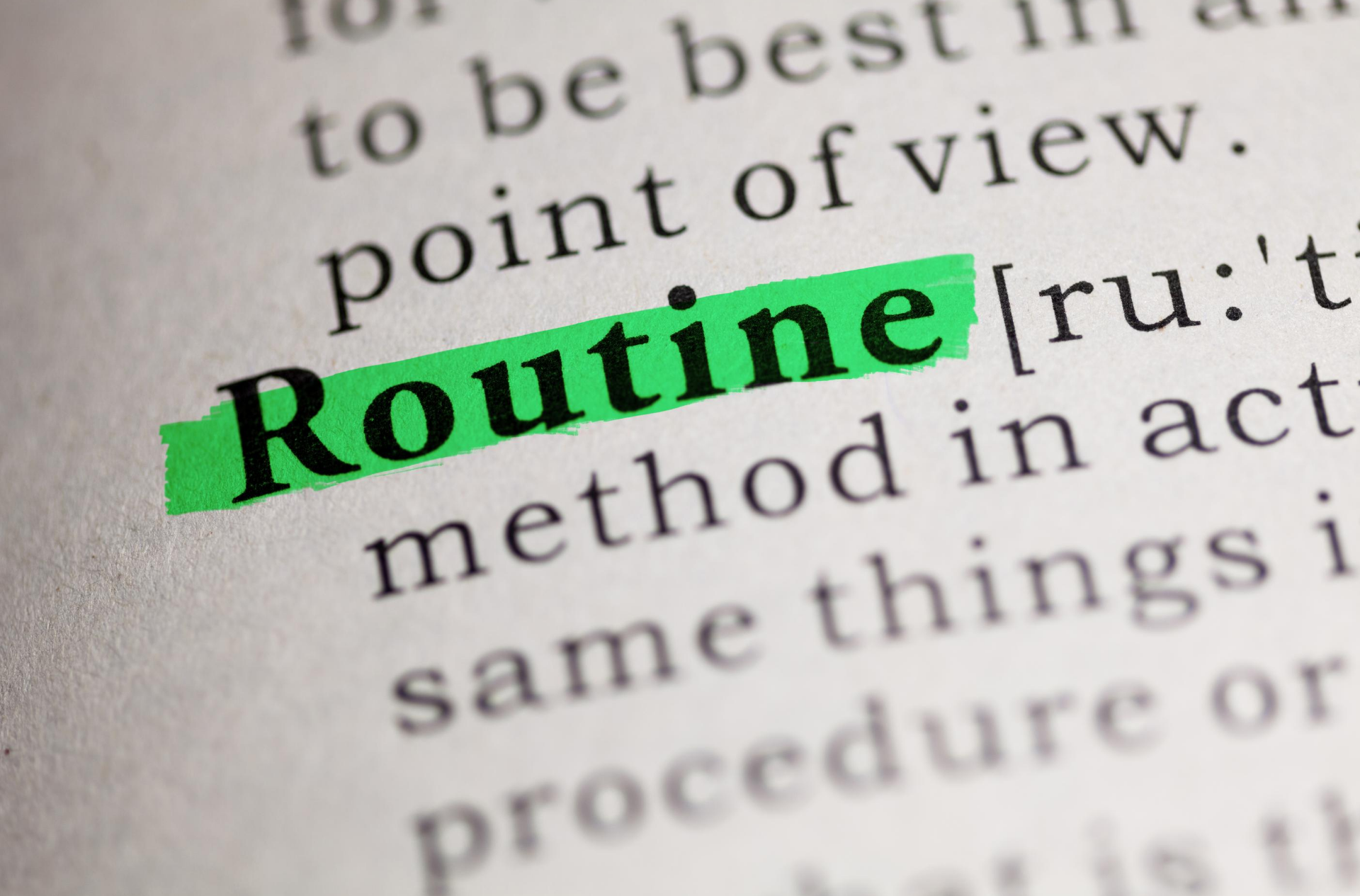
The author described a routine as something you do every day without fail, until eventually it becomes as automatic as brushing your teeth or fastening your seatbelt. You don’t debate it. You don’t overthink it. You just do it.
And the more I thought about it, the more I realised that routines are everywhere in success stories.
Elite athletes don’t win gold medals because they suddenly perform brilliantly one day. They win because of thousands of days that looked almost identical — training, practice, recovery, repeat. Soldiers are trained through routine so their bodies and minds respond automatically under pressure. Pilots follow the same pre-flight checks every single time, no matter how many hours they’ve flown, because routine doesn’t just prepare the aircraft — it prepares them.
Routine builds readiness. Routine builds confidence. Routine builds safety.
And then my thoughts shifted somewhere deeply personal.
Because autistic children don’t just benefit from routine — they thrive on it. 🌱
For many autistic individuals, routine isn’t about productivity or success in the traditional sense. It’s about stability in a world that often feels unpredictable, overwhelming, and too loud. Knowing what will happen next reduces anxiety. Familiar patterns create a sense of control. Repetition provides comfort.
What might look “rigid” from the outside is often a lifeline on the inside.
Morning routines, bedtime rituals, the same route to school, the same foods, the same order of events — these aren’t arbitrary preferences. They are anchors. ⚓
When those anchors hold, a child can relax, learn, explore, and engage. When they are suddenly pulled away, the result can be confusion, distress, or meltdown — not because the child is being difficult, but because their sense of safety has been disrupted.
And here’s the thought that stopped me in my tracks:
So many successful people credit routine as a key factor in their achievements… yet autistic individuals are often criticised for needing it.
Why is something considered a strength in one context but a weakness in another?
In reality, the very traits that make routine essential for autistic people can also be powerful assets.
Consistency.
Focus.
Attention to detail.
Reliability.
Comfort with repetition.
There are countless roles and environments where these qualities are not just helpful — they are invaluable. Jobs that require precision, structure, pattern recognition, or deep concentration can be places where autistic individuals truly shine. 💡
When given understanding, accommodations, and the freedom to work in ways that suit their neurology, many autistic people excel in fields ranging from technology and engineering to research, creative arts, data analysis, animal care, skilled trades, and beyond. The possibilities are far broader than stereotypes suggest.
Routine, in this light, isn’t a limitation.
It’s a framework for success.
It’s also a reminder to all of us — parents, educators, employers, and society as a whole — that success doesn’t come from forcing everyone into the same mould. It comes from recognising different strengths and creating environments where those strengths can flourish.
As a parent, this idea feels both reassuring and hopeful. ❤️
The routines we build for our children today aren’t just about getting through the day. They are building skills, resilience, and confidence for the future.
And perhaps there’s a lesson here for everyone, autistic or not.
We often chase big changes, dramatic transformations, and overnight success. But real progress usually grows quietly, through small actions repeated with intention. Through habits that become automatic. Through routines that carry us forward on days when motivation is nowhere to be found.
Success, safety, and stability don’t come from one extraordinary moment.
They come from ordinary moments, repeated with care.
So maybe the goal isn’t to eliminate routine from our lives — but to build routines that support who we are and who we want to become.
And for autistic children especially, those routines aren’t chains.
They’re wings. 🕊️