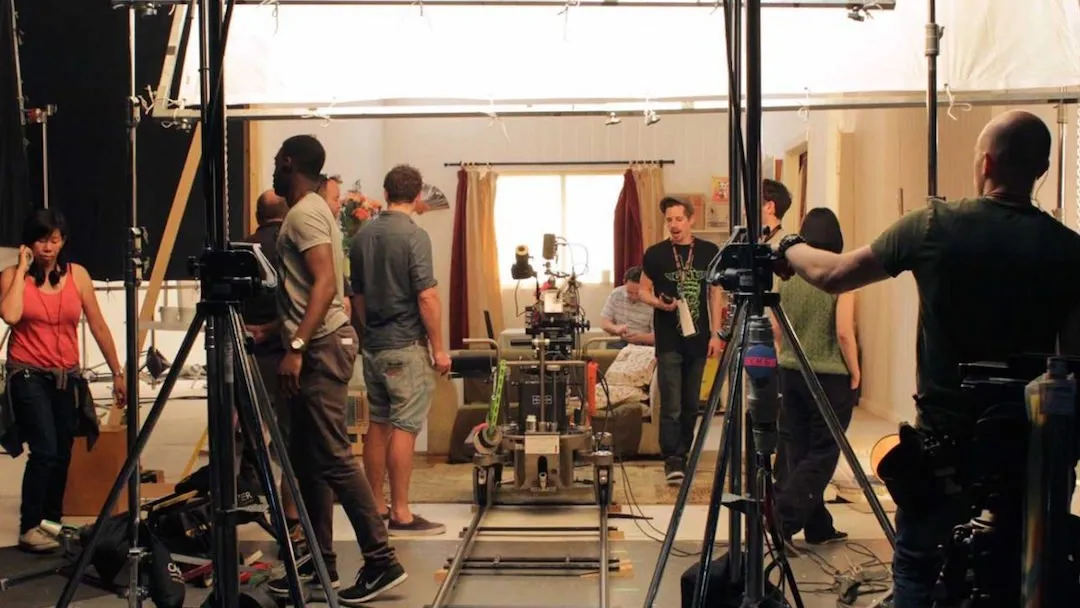
I’ve worked in the film industry for ten years. Ten years of early call times, walkie-talkies, and the kind of organised chaos that somehow produces something beautiful at the end of it. And in all that time, I’d never — not once — seen a workplace stop and say: hey, let’s make sure everyone actually knows how to include this person properly.
Until recently.
A production I know of recently welcomed a new trainee. He’s autistic. And like a lot of autistic people — including my own kids — he has some pretty specific sensory preferences. He doesn’t like to be touched. He won’t shake hands. And he has what a lot of us in the autism community would recognise immediately: a flat affect. A blank expression. A face that doesn’t give much away, even when he’s absolutely loving every second of what he’s doing.
Now, in most workplaces — especially fast-paced, high-pressure ones like a film set — that could go one of two ways. People could quietly write him off as unfriendly, disengaged, or just a bit odd. Or someone could actually do something about it.
They did something about it.
The production department — with his full knowledge and blessing — sent out an email to the team. A kind, thoughtful, properly lovely email that explained a bit about him. What he likes. What he doesn’t like. The fact that he won’t be shaking anyone’s hand, and that’s absolutely fine. And — the bit that genuinely got me — it explained that even though he might look like he’s not bothered, that blank expression doesn’t mean he’s not engaged. It doesn’t mean he’s not happy. It doesn’t mean he’s not thriving.
It just means he’s him.
I’ll be honest with you — I cried reading about this. Because in a decade of working in this industry, I have never seen anything like it. Film sets are incredible places, but they’re not always the most neurodivergent-friendly environments. They’re loud, they’re unpredictable, they run on handshakes and eye contact and reading the room. For someone like this young man, that can be an awful lot to navigate before you’ve even had your first cup of tea in the morning.
But someone on that production team thought: what if we just made it easier? What if, instead of leaving him to figure it out on his own, or leaving his colleagues to make assumptions, we just… told people? Kindly. Clearly. With his blessing.
And they did.
That’s it. That’s the whole thing. And it was enough.
Here’s the thing though — we can’t wait around for the occasional brilliant production department to get it right. Because for every team that sends that email, there are dozens of workplaces where autistic employees are quietly struggling, being misread, being overlooked, or just masking so hard every single day that they’re exhausted before the work even begins.
Advocating for autism awareness isn’t just about the big, dramatic gestures. It’s about this. It’s about normalising conversations around neurodivergence in the workplace. It’s about teaching neurotypical people that a blank expression isn’t rudeness. That not shaking hands isn’t unfriendliness. That someone who doesn’t do small talk or eye contact might be one of the most dedicated, talented people in the room.
We need more of these emails. More of these conversations. More workplaces willing to say: we don’t expect you to fit our mould — we’ll adjust the mould instead.
Things are changing. Slowly, in little pockets, in places you don’t always expect — like a film set in the middle of a busy shoot.
But they are changing. And that’s worth celebrating.